AI Can’t Dominate Culinary Academies, and It’s Foolish to Use It for Recipes
In the modern world, where technology seems to have an answer for everything, there’s a growing trend to integrate Artificial Intelligence (AI) into every aspect of our lives, including the culinary arts. While AI has made significant strides in various fields, suggesting that it could dominate or even significantly influence the traditional culinary academies, particularly in the realm of recipe creation, is not just misguided; it’s downright foolish. Here’s why:
The Human Touch in Culinary Arts
Culinary arts are an expression of culture, creativity, and personal touch. Chefs at culinary academies aren’t just taught how to follow recipes; they’re trained to understand the nuances of flavors, the art of presentation, and the emotional connection food can create. AI, by its very nature, lacks the emotional depth, the intuitive understanding of taste, and the cultural heritage that human chefs bring to the table.
-
Creativity: AI can generate recipes by analyzing existing data, but it doesn’t possess the creativity to innovate beyond what it knows. The unpredictability and spontaneity that come from a chef’s inspiration cannot be replicated by algorithms.
-
Emotion and Intuition: Cooking isn’t just about combining ingredients; it’s about the chef’s intuition, the feel of the dough, the aroma of spices blending, and the visual appeal of a dish. AI can’t experience these sensory inputs or the emotional response they evoke.
The Limitations of AI in Recipe Development
Let’s delve into why using AI for recipe creation in a culinary academy setting is impractical:
-
Lack of Contextual Understanding: Recipes are not just lists of ingredients and instructions; they’re born from contexts—cultural, historical, and personal. AI might suggest a fusion of flavors from different cuisines without understanding the cultural significance or the traditional methods behind them, leading to dishes that might be innovative but lack depth or authenticity.
-
Taste and Flavor: AI can’t taste food. It relies on data from human taste preferences, which can be incredibly subjective. What’s considered a perfect balance of flavors by one person might be off-putting to another. This subjective nature of taste is something AI can’t grasp beyond statistical models.
-
Texture and Technique: The texture of food is crucial; it’s why we bake bread, braise meats, or whip cream. AI can suggest these techniques based on data but doesn’t understand the subtle differences in texture that come from slight variations in technique, which are often taught through years of hands-on experience in culinary academies.
The Role of Culinary Academies
Culinary academies are more than just places where recipes are learned; they are environments where chefs are crafted. Here’s what they offer that AI can’t:
-
Hands-On Training: The tactile experience of cooking, the muscle memory developed through repetitive tasks, the ability to adjust on the fly based on the feel and smell of the food—these are all critical aspects of culinary training that AI cannot simulate effectively.
-
Mentorship and Tradition: The mentorship provided by experienced chefs, passing down not just recipes but stories, traditions, and the philosophy behind the cuisine, is irreplaceable. AI might provide information, but it can’t mentor in the true sense.
-
Adaptability and Problem Solving: Culinary arts require quick thinking and problem-solving, skills honed in the unpredictable environment of a kitchen. AI can suggest solutions based on data, but it can’t adapt in real-time like a human chef can.
Conclusion: The Foolishness of Over-Reliance on AI
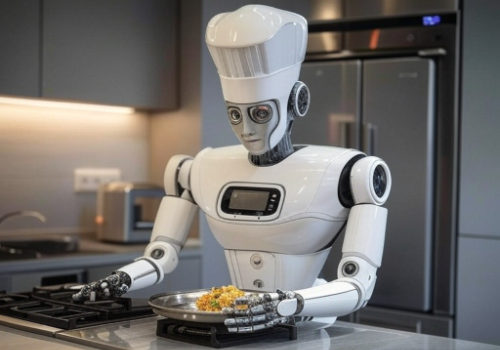
While AI has its place in modern kitchens, from inventory management to perhaps suggesting basic recipe ideas based on dietary restrictions or ingredient availability, the idea that it could dominate or even significantly alter the teaching methodologies in culinary academies is laughable. Suggesting that AI should be used for creating recipes in such an environment is not just impractical; it’s a misunderstanding of what culinary arts truly represent.
Culinary education is about nurturing a chef’s soul, their creativity, and their connection to food and people. AI can assist, but it cannot lead. It’s time we recognize the irreplaceable value of human chefs in culinary academies and use technology to enhance, not replace, the human experience in the kitchen. Let’s keep AI where it belongs in the culinary world—as a tool, not the maestro.